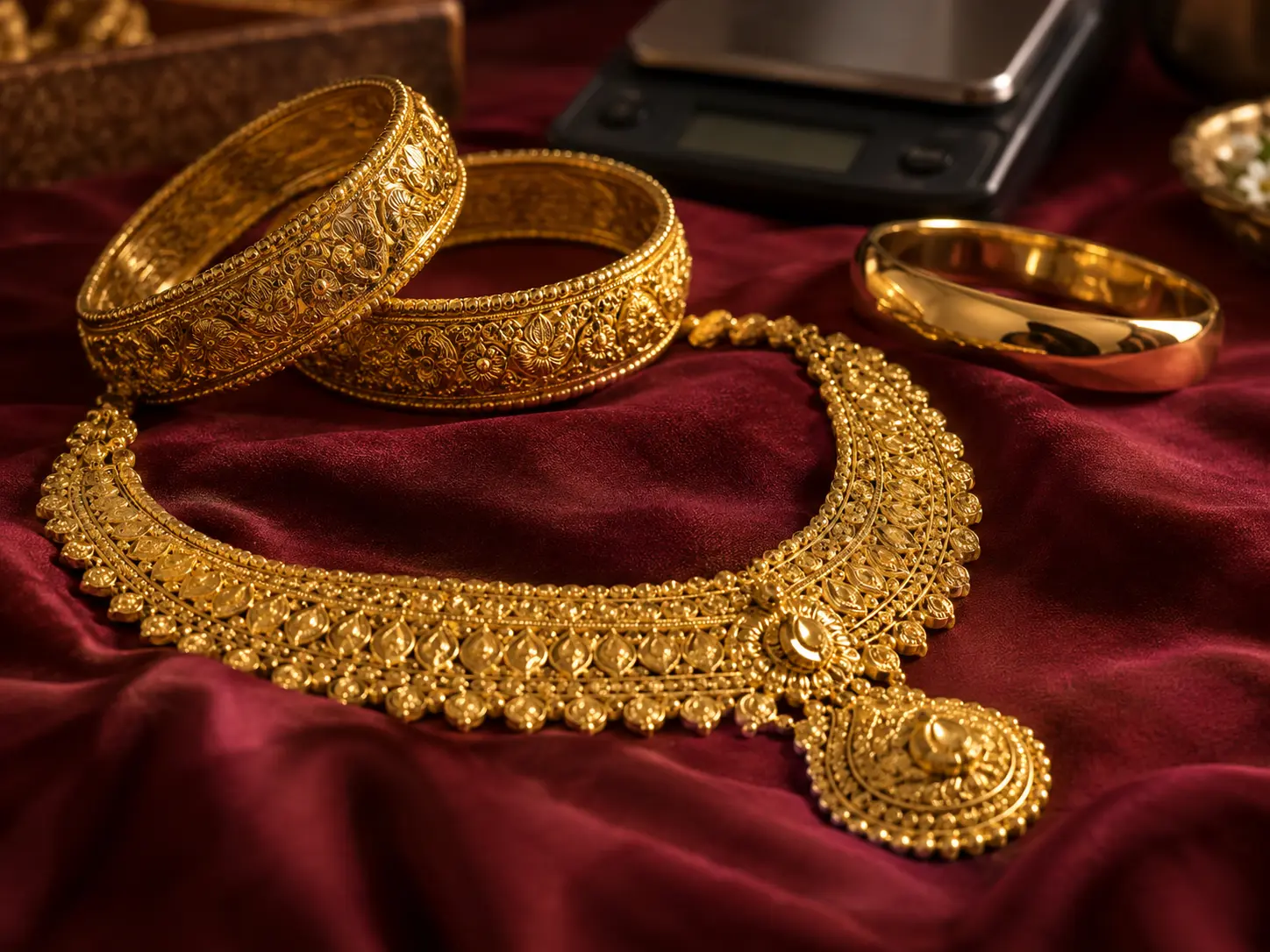
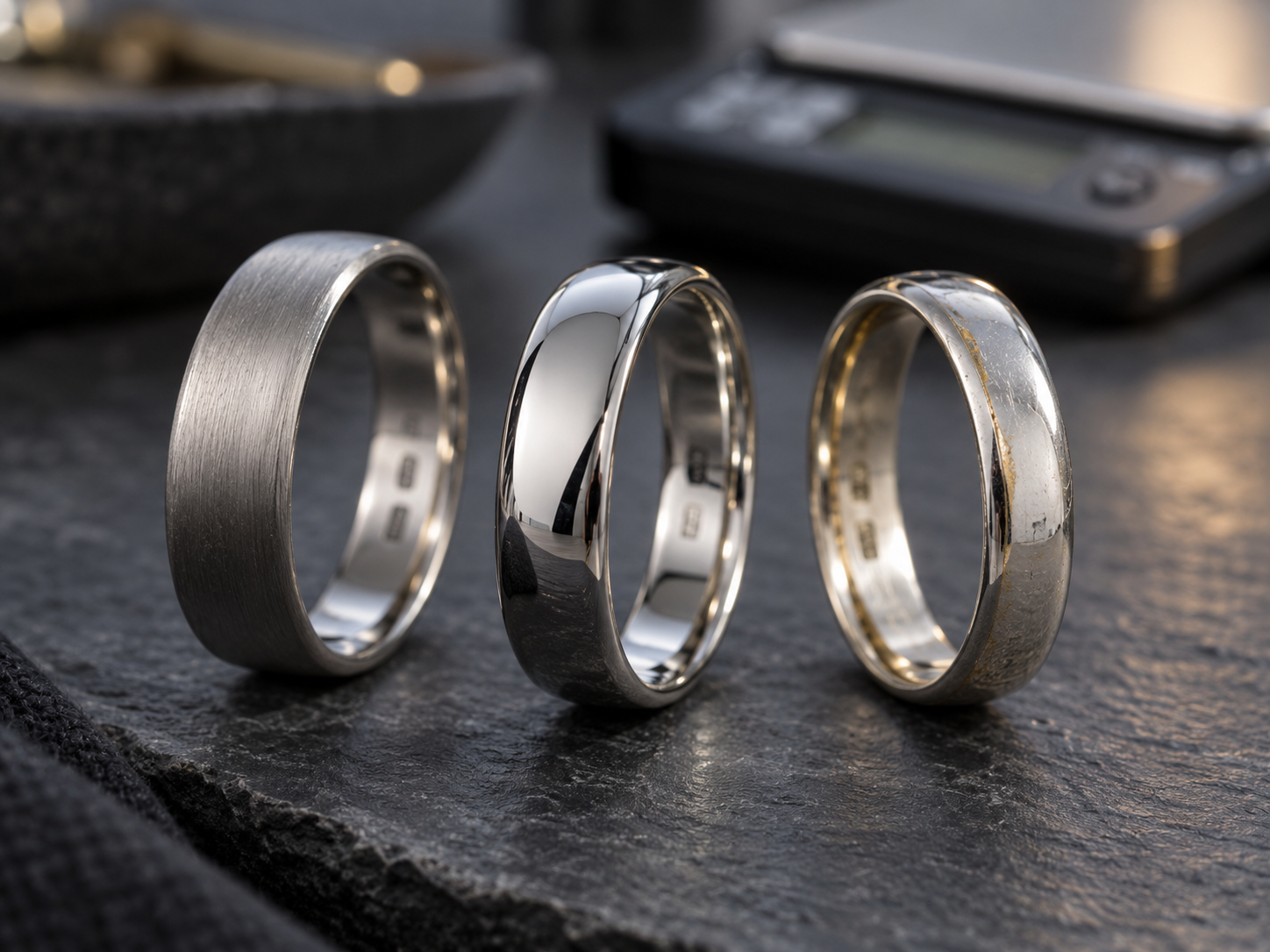
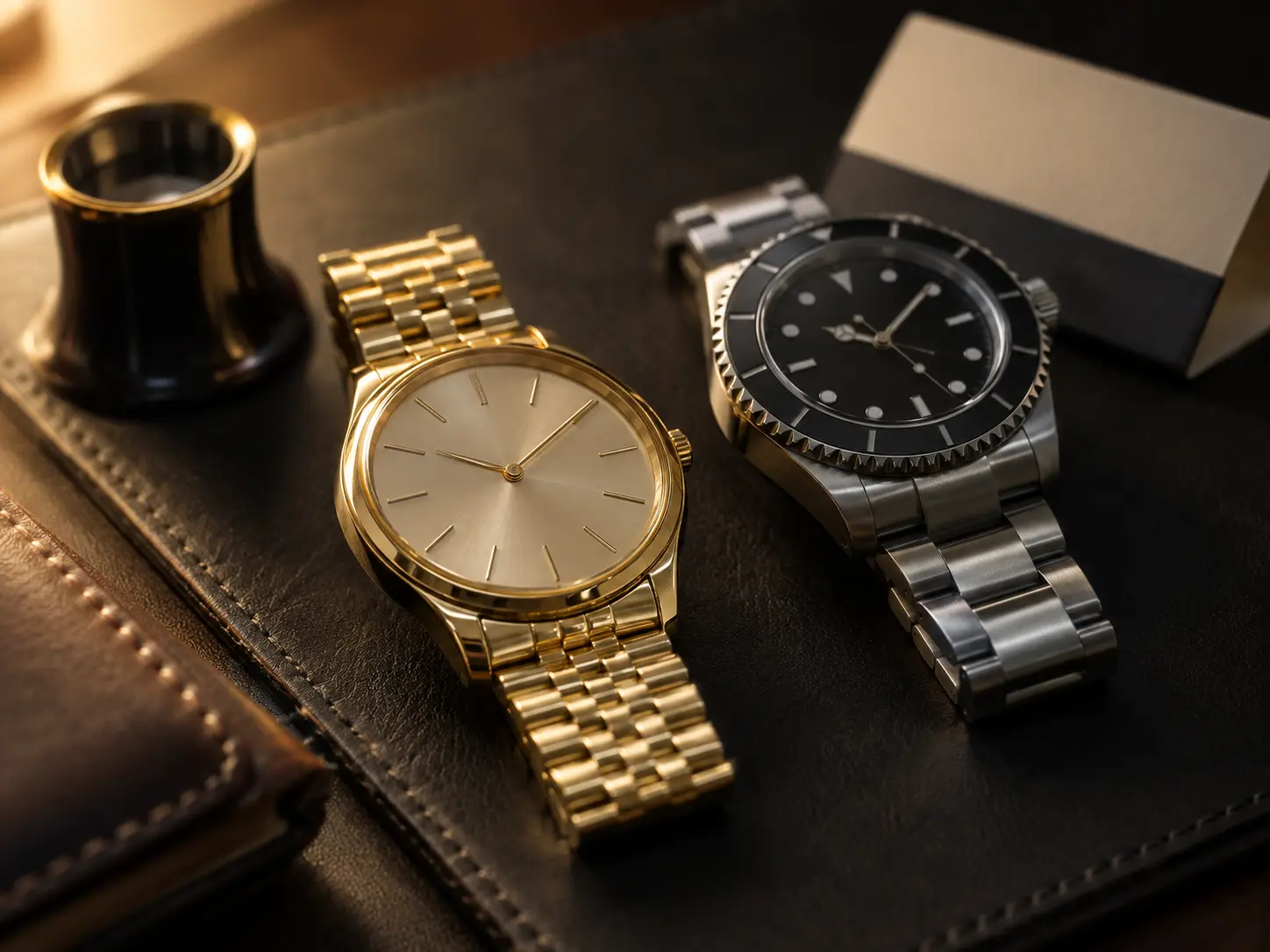
A lot of the gold that comes across our counter in San Francisco and Houston doesn’t look like the 14K chains you find at an American mall jewelry store. It’s deeper in color, softer to the touch, and often handmade. Bangles from India. A heavy necklace from a wedding in Pakistan or Bangladesh. A bracelet bought in Dubai or Cairo. Pure gold jewelry from Hong Kong or Guangzhou. A chain from Bangkok.
Most of it is high-karat gold: 21K, 22K, sometimes 24K. And per gram, it’s worth a lot more than the 10K and 14K jewelry most American buyers are used to handling.
I’m Larry, and I’ve been buying gold and silver for close to 20 years, first in Houston and then at Bay Area Gold & Silver Buyers in San Francisco, where I opened around 2010. We now have locations in both cities. This post explains how high-karat gold is valued, what the marks mean, what can lower the amount of gold in a piece, and how to make sure you’re paid for the gold that’s actually there.
Why so much of the world’s jewelry is 22K
In the United States, most gold jewelry is 10K or 14K. Lower karat gold is harder, it holds stones well, it’s cheaper, and it’s what American shoppers have bought for generations.
In much of South Asia, the Middle East and East Asia, the tradition is different. Gold jewelry is often bought as much for its gold as for its looks. It’s given at weddings and births, passed between generations, and treated as a form of family savings. When jewelry plays that role, people want as much gold in it as possible. That’s why 22K became the standard in India, 21K is common across much of the Middle East and Egypt, and 24K “pure gold” jewelry is popular in China and Hong Kong.
High-karat gold also has a richer, deeper yellow color that a lot of people simply prefer. Once you’ve seen 22K next to 14K, the difference is easy to spot.
The numbers: what each karat contains
Karat tells you what fraction of the metal is pure gold, out of 24 parts. Here’s what that means in percentages, along with the fineness numbers you’ll often see stamped on jewelry from outside the US:
24K is about 99.9 percent gold, often marked 999 or 9999. 22K is 91.67 percent gold, usually marked 916 or 22K916. 21K is 87.5 percent gold, marked 875. 20K is 83.3 percent gold, marked 833. 18K is 75 percent gold, marked 750. 14K is 58.3 percent gold, marked 14K or 585. 10K is 41.7 percent gold, marked 10K or 417.
You’ll notice 22K jewelry carries about 57 percent more gold than 14K jewelry of the same weight. That’s a big gap, and it’s exactly why getting the karat right matters so much.
What high-karat gold is worth right now
As I write this in mid-October 2026, gold is trading around $4,190 per troy ounce. One troy ounce is 31.1 grams, so pure gold is worth about $134.70 per gram.
Here’s what that works out to per gram, in gold content, for each karat:
24K: about $135 per gram 22K: about $123 per gram 21K: about $118 per gram 18K: about $101 per gram 14K: about $79 per gram 10K: about $56 per gram
Now some examples, so the numbers feel real.
A set of four 22K bangles that weighs 40 grams in total holds about $4,940 in gold.
A 22K necklace weighing 50 grams holds about $6,170 in gold.
A 21K bracelet from the Gulf weighing 30 grams holds about $3,540.
A 24K pure gold bracelet from Hong Kong weighing 20 grams holds about $2,690.
Compare that with a 14K bangle. Twenty grams of 14K holds about $1,570 in gold. Twenty grams of 22K holds about $2,470. Same weight, about $900 difference, all because of the karat.
These are melt values, meaning the value of the gold inside at today’s price. No buyer pays 100 percent of melt value, because the gold still has to be refined, and that costs money. But melt value is the ceiling, and you should know it before you accept any offer.
Reading the marks
High-karat jewelry usually comes from places with their own marking systems. Here’s what to look for.
Indian BIS hallmarks. India’s Bureau of Indian Standards runs the national hallmarking system. Hallmarking became mandatory for gold jewelry in hundreds of districts starting in June 2021, and since April 2023 jewelers in those areas can only sell pieces carrying the newer six-character code. A current BIS hallmark has three parts: the BIS triangle logo, a purity mark like 22K916, and a six-character alphanumeric code called the HUID (Hallmark Unique Identification). Each HUID is unique to that piece, and it can be checked in the BIS CARE app.
Older Indian jewelry may carry the earlier hallmark format, with a jeweler’s mark and a hallmarking center mark instead of the HUID. And a lot of older pieces, especially family pieces made before hallmarking was common, have no hallmark at all. That doesn’t mean the gold isn’t real. It just means it needs testing.
You’ll sometimes see “916 KDM” on older Indian jewelry. KDM refers to a type of solder jewelers used, not an official hallmark. It tells you what the jeweler claimed, not what an independent center certified.
Middle Eastern marks. Jewelry from the Gulf states, Saudi Arabia and Egypt is very often 21K and stamped 875. You’ll also see 18K (750) and 22K (916). Some pieces are stamped using Arabic-Indic numerals, so 875 may appear as ٨٧٥ and 21 as ٢١.
Chinese and Hong Kong marks. Pure gold jewelry from China and Hong Kong is often marked with Chinese characters. 足金 (pronounced “chuk kam” in Cantonese) means pure gold, at least 99.0 percent. 千足金 means 99.9 percent. You may also see 999 or 999.9.
Thai gold. Traditional Thai gold jewelry is commonly 96.5 percent gold, which is between 23K and 24K. It’s sold by the baht, a Thai unit of weight, rather than by the gram.
Southeast Asian and other marks. You’ll find 916, 750 and 999 used widely across Singapore, Malaysia, Vietnam and elsewhere.
Marks are a good starting point. But they’re not proof. Some pieces are under-marked, some are over-marked, and plenty are unmarked. The only way to know for certain is to test the metal.
What lowers the amount of gold in a piece
This is the part people are often surprised by. A piece can be genuine 22K gold and still contain less gold than its weight suggests, because some of that weight isn’t gold at all.
Kundan and polki jewelry. Traditional kundan and polki pieces often have a filling of lac (a resin) behind the stones to support them and give the piece body. That filling can be a meaningful share of the weight. The gold is real, but it’s only part of what’s on the scale.
Enamel work. Meenakari enamel adds color to the gold. The enamel itself has no gold value.
Stones, pearls and beads. Rubies, emeralds, pearls, glass and crystal all add weight without adding gold. So do the black beads on a mangalsutra and the threads that hold beaded pieces together.
Hollow construction. Some large, impressive-looking pieces are hollow inside, so they weigh much less than they look. That doesn’t make the gold any less real. It just means there’s less of it.
Solder joints. Handmade jewelry has many soldered joints, and solder can be slightly lower in purity than the rest of the piece. That’s why a piece marked 22K sometimes tests a little below 916 overall.
None of this means anyone did anything wrong. It’s just how traditional jewelry is made. But it explains why two pieces that weigh the same can hold different amounts of gold, and why a careful buyer looks at more than the number on the scale.
When a piece has a lot of stones, beads or filling, we explain how we’re accounting for the parts that aren’t gold before you decide anything. We no longer buy diamonds, because lab-grown stones have changed that market so much that I don’t think we can make fair offers on them. If a piece has stones you want to keep, tell us and we’ll talk through your options.
Why the price you paid isn’t the price you’ll get
This catches a lot of people off guard, especially with jewelry bought recently.
When you buy gold jewelry at a store, in India or anywhere else, you pay for the gold plus making charges and taxes. Making charges cover the jeweler’s labor and design, and on elaborate handmade pieces they can be substantial. When you sell, a buyer is paying for the gold content. The making charges and taxes you paid don’t come back.
So if you bought a 22K necklace two years ago, the gold inside may now be worth more than the gold portion of what you paid, because gold has gone up a lot since then. But the total offer may still be less than the full receipt amount, because the receipt included things that aren’t gold.
Knowing this ahead of time makes the conversation a lot less surprising.
A note on festival season
Dhanteras falls on Friday, November 6 this year, and Diwali on Sunday, November 8. For many families it’s a traditional time to buy gold, and some trade older pieces toward new ones at their jeweler.
If you’re thinking about an exchange, it helps to know what your older gold is worth on its own first. That way you can compare the exchange credit you’re offered with what the gold is worth as metal, and make the choice that suits you. Knowing the number doesn’t commit you to anything.
About family gold
A lot of the 22K gold I see is family gold. Wedding jewelry. Pieces from a mother or grandmother. Gold that was given with a lot of meaning attached.
We understand that. Many people come in just to find out what their gold is worth, without any plan to sell, and that’s completely fine. Some come back months later. Some never sell at all, and that’s fine too. Some decide to sell the broken or outdated pieces and keep the ones that matter. There’s no pressure either way.
The best decisions about family gold are made with real information, so even if you never intend to sell, it can be worth knowing the number.
How we test high-karat gold
At both locations, we test with a Niton XRF metal analyzer. It reads the elemental makeup of the metal in about 30 seconds without scratching or damaging the piece, and we do it on the counter, in front of you. You can watch the result on the screen.
With handmade high-karat jewelry, we often test more than one spot, because clasps, hooks, and soldered joints can read differently from the main body of the piece. Then we weigh each karat group on a calibrated scale, pull up the current gold price, and walk you through the math step by step.
If you accept the offer, we pay you by check on the spot. If you don’t, you take everything home. And I’d encourage you to get a second quote somewhere else, too. We say that on our website and we mean it.
Before you visit
Gather everything, including broken pieces and single earrings. Look for marks like 916, 875, 750, 999 or Chinese characters, but don’t worry if you can’t find any. Don’t clean anything, and don’t try to remove stones yourself. If you have receipts or hallmark certificates, bring them, though they aren’t required. Bring a valid government-issued photo ID, which the law requires for every sale.
We’re at 780 Sutter Street in San Francisco and 2635 Gessner Road in Houston, Monday through Saturday, 10 AM to 5 PM. Walk-ins are welcome, and if you’re bringing a large collection, booking an appointment online helps us give it the time it deserves.
The evaluation is free. You’ll leave knowing exactly what you have, whether you sell or not.