Gold just had its worst week in a while, and if you’ve been watching the numbers slide, you’re probably wondering the same thing a lot of our customers are asking us: is this the moment to sell, or the moment to sit on your hands?
Here’s the refreshing part. You don’t actually have to answer that question to make a good decision. The Federal Reserve meets on December 8–9, and that meeting isn’t a signal to rush into a sale or a reason to wait for a rebound. It’s just a date on the calendar, and there are three weeks between now and then. Use them to get clear about what you own, what it’s worth today, and the number that would actually feel right to you.
This week: a 13-month low, then a modest bounce
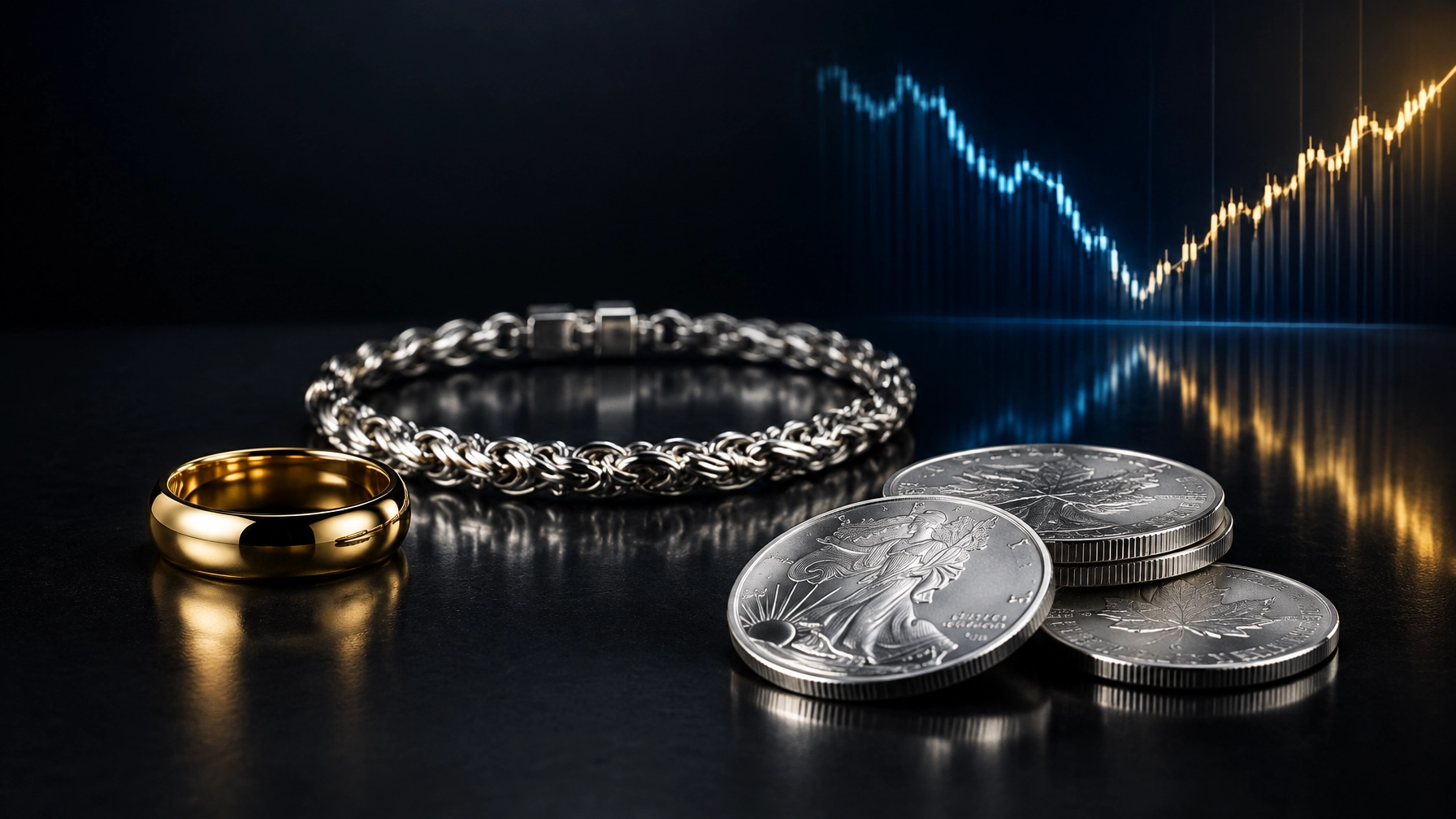
Spot gold fell to about $3,864 an ounce on Thursday, November 12, its lowest level in more than a year. On Friday, it rebounded to around $3,891.50, up $15.10, or 0.39%. Even after that bounce, gold is down about 13% from its highs, and it has briefly traded below $4,000 in recent weeks.
Several forces have been pushing on prices. October consumer inflation came in hotter than expected, and the October jobs report showed 165,000 new jobs, with unemployment falling to 4.1%. Those figures added to expectations that the Fed may raise rates at its December meeting. A stronger dollar and high Treasury yields have also weighed on gold.
The picture isn’t one-way, though. October producer prices rose 0.3% for the month, below the 0.4% expected, while annual producer inflation accelerated to 6.5%, its highest since November 2022. New York Fed President John Williams said additional policy action would likely be needed to bring inflation under control while avoiding excessive damage to employment. Meanwhile, the 10-year Treasury yield was near 5.13%, the dollar index held above 103, and oil prices were elevated amid unresolved U.S.-Iran tensions.
For a market recap, see Kitco’s report on gold’s 13-month low and the Fed outlook.
A 0.39% bounce isn’t a recovery
A green day feels good after a red week. We get it. But let’s be honest about the size of it: 0.39% is a rounding error in a market that just moved 13%. One good session isn’t proof that gold has found a floor, and anyone telling you otherwise is guessing.
So before you let a headline make the decision for you, here’s a question worth sitting with: do you know what your own pieces are actually worth today? Not what gold is worth. What yours are worth. That’s a much more useful number, and it’s one you can get without predicting anything.
Why December 9 matters to sellers
The Fed meets December 8–9. As of Friday, futures markets were pricing roughly an 89% chance of a 25-basis-point rate hike and an 11% chance of a 50-basis-point hike.
A scheduled rate decision matters because markets can reprice quickly when the Fed announces its decision and explains its thinking. Prices could react in either direction, depending on what markets already expect and what the Fed signals next. That uncertainty is a good reason to get informed now, not a reason to panic or to make a sale by a deadline.
There’s also market data between now and the meeting: the Empire State manufacturing survey on Monday, October retail sales on Tuesday, and the Fed’s October meeting minutes on Wednesday, November 18. Each could influence expectations, but no single data release can tell you where gold will be on December 9.
The three numbers to know about your gold
Before deciding whether to sell, focus on three practical numbers: weight, purity, and the actual offer.
1. The item’s gold weight. The weight of a piece isn’t always the weight of its gold. Gemstones, clasps, and other materials may affect the scale reading. A professional evaluation can help identify what should be counted.
2. The purity. A 14-karat piece is 14 parts gold out of 24; 18-karat is 18 parts out of 24. The karat tells you the proportion of gold, but an in-person test can help verify what you have.
3. The offer compared with the spot value. Spot is a market reference for an ounce of pure gold, not a promise of what a buyer will pay for a particular piece. A buyer’s payout is below spot, and an actual offer depends on the tested gold content and the buyer’s pricing.
Here’s a simplified example using Friday’s spot price of about $3,891.50 per troy ounce:
- A 10-gram 14K item contains an estimated 10 × 14/24 = 5.83 grams of pure gold, before any adjustments for stones or non-gold parts.
- There are about 31.1 grams in a troy ounce, so 5.83 grams is approximately 0.188 troy ounces of gold.
- At $3,891.50 per ounce, that gives an approximate spot-based metal value of $730.
That $730 is a math example, not a quote. It doesn’t account for what an evaluation finds, or the buyer’s costs and offer. In other words: spot helps give you a reference point, but the number for your item comes from its actual weight and purity, and the offer you choose to accept.
At Bay Area Gold and Silver Buyers, we’ve been in business for over 15 years. We provide free, no-obligation evaluations, and we use XRF testing right in front of you so you can see the purity reading yourself. We aim to offer the highest payouts in the Bay Area, with honest, knowledgeable service and no pressure to sell.

What a low can, and can’t, tell you
A market low can tell you what the spot reference is today. It can’t tell you next month’s price or predict what happens after the Fed meeting.
Analyst views underline that uncertainty. Standard Chartered sees gold rallying to $4,650 by year-end, while other analysts warned of further losses toward $3,900. Same market, same week, opposite conclusions. That’s not a reason to feel paralyzed, it’s a reason to stop waiting for a unanimous answer that isn’t coming. Société Générale estimated gold could see $3.3 billion of buying from index rebalancing after the 13% decline. Those are different views, not guarantees. You can read the forecasts from Standard Chartered’s outlook and the analysts warning of further losses.
Silver is doing its own thing
Silver was near $49.96 an ounce on Friday, roughly flat. Earlier in the week it had rebounded about 5.5% to around $51.80 before pulling back. The gold/silver ratio, the amount of silver priced equal to one ounce of gold, was around 78.
Silver has its own industrial demand story, so don’t assume it will move in lockstep with gold. BMO has said silver’s solar boom is fading and that investment demand may not make up for weaker solar demand. For more on that view, see BMO’s analysis of silver and solar demand.

A practical playbook for the weeks ahead
You don’t have to forecast the Fed. You just have to know your own numbers. Here’s the plan we walk customers through every week:
- Take inventory at home. Gather the jewelry, coins, silverware, or other items you may want evaluated. Keep groups of items together, and don’t worry if something is broken or tarnished.
- Get a free evaluation now. Knowing the offer before the headlines pile up gives you a concrete number to consider. An evaluation is not a commitment to sell.
- Decide what would make you comfortable. Think about your own goal: clearing out unused pieces, getting cash for a planned expense, or simply understanding what you own. Set a price or outcome that would feel worthwhile to you.
- Give yourself room to choose. Compare offers if you’d like, ask questions, and take time to think. A calendar date shouldn’t make the decision for you.
If you’re ready to learn what your pieces may be worth, book a free, no-obligation appointment. Bring the pieces you’re curious about, even the broken ones and the ones you think are worthless. We’ll test them in front of you, show you the readings, and explain the offer in plain language. You decide whether to accept, and walking out with your items is always a perfectly good outcome. You can also check our list of gold, silver, and other items we buy.
Market commentary disclaimer: This post is for general informational purposes only and isn’t financial advice. Precious-metal prices can change, and a spot price does not guarantee a buyer’s offer.